
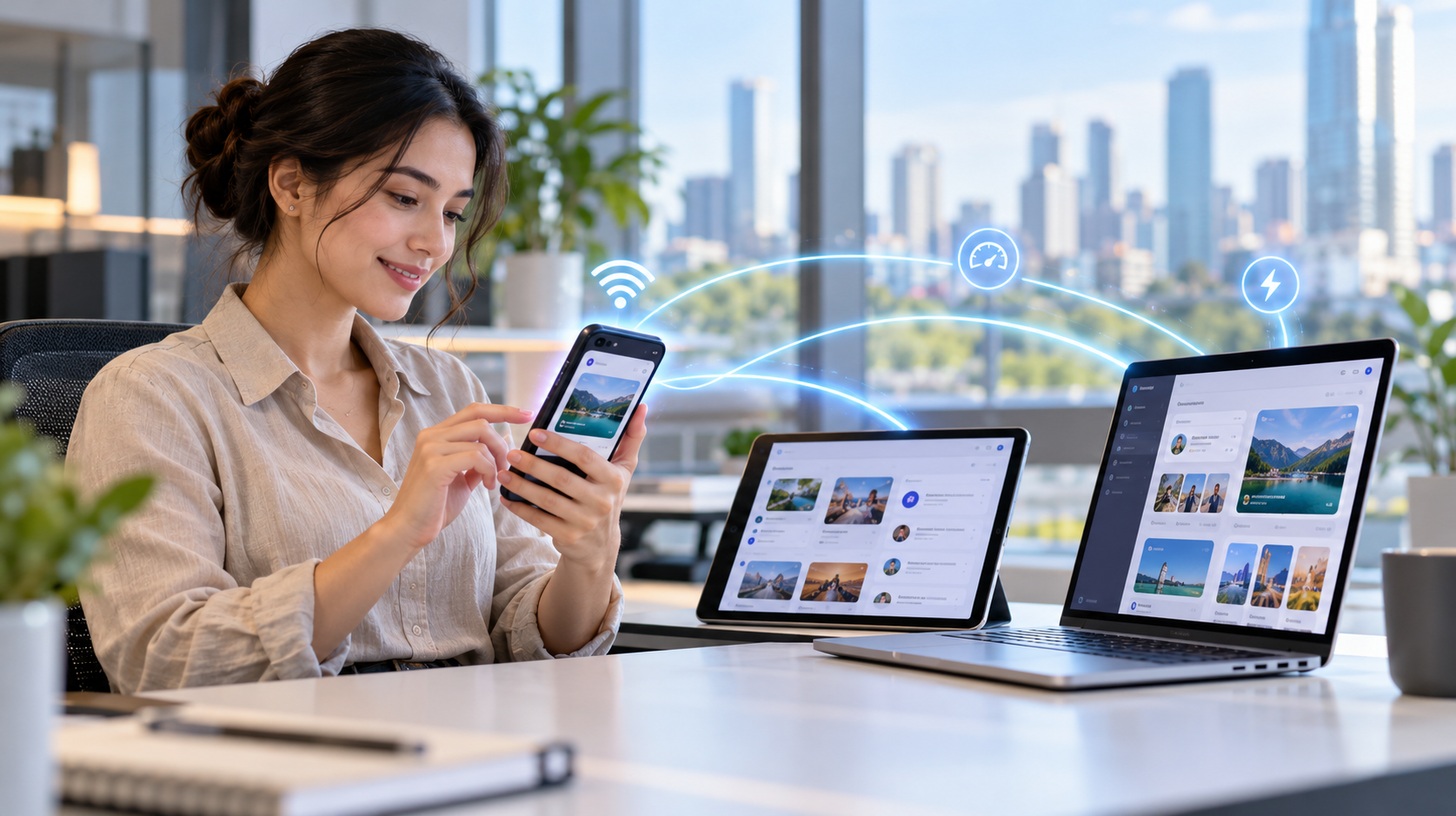
A video call freezes just as you’re making a point. A shopping app stalls while product photos load. Even a quick call to Ethiopia can turn frustrating when the connection keeps dropping.
Small delays like these are easy to notice and hard to forgive. A solid 5G signal can help apps feel faster, mainly when they send lots of data or need a quick reply.
But 5G can’t fix slow code. Here’s what it does well, where it falls short, and what that means for app owners.
Understanding 5G and its key capabilities
5G is the fifth generation of mobile networks. It can boost download and upload speeds, cut latency (the wait for a reply), and serve more users in busy places.
That means files arrive sooner and live tools respond faster. 5G can also help apps connect to a wide range of smart devices.
Still, results depend on your phone, local coverage, and network traffic. A 5G icon is no speed guarantee.
How 5G improves mobile app performance
- Faster loading. Large photos, maps, and files can show up sooner. That helps media-heavy apps feel quicker. Poor code, though, can still make them crawl.
- Smoother video. Streams start faster and may play in higher quality. A stronger upload link can also help when you send a clip or join a video call.
- Better cloud access. Apps can sync work, use AI tools, and load cloud files with less wait. Nearby edge servers can cut delays even more. If apps load heavy files only when needed, they can also use less storage on your phone.
- Less lag in games. Quick network replies help multiplayer games and cloud gaming feel more natural. But server speed and network traffic still play a part.
How 5G improves the mobile user experience
Think of an AR shopping app that lets you place a sofa in your living room. With a good 5G signal, it can load large 3D models faster.
Or take a live translation app: speech can reach a cloud AI tool and come back sooner. VR tools may feel smoother, too, though the device still needs to render each frame well.
The smaller things matter, too. Someone using an international calling app might just want to see the calling plans, check a rate, or find a contact without waiting for every screen to load.
Stores and media apps can update suggestions faster, too. But 5G doesn’t make those picks smarter. That still comes down to the AI model and the data behind it.
Sensors, trackers, and wearables can send fresh updates when they use 5G. The result? Less waiting and fewer taps to get what you need.

Industries that benefit from 5G apps
- Healthcare: Video visits may run more smoothly. Doctors can also share large scans faster, though secure systems and good coverage are still vital.
- Retail: Shoppers can view detailed product images, try AR previews, and move through checkout with less delay.
- Gaming and entertainment: Less lag helps cloud games. Fast data speeds also support clear video on the go.
- Finance: Balance updates and alerts can arrive sooner. But safe payments still rely on sound app security, not network speed.
- Logistics and manufacturing: Sensors and tracking tools can send live updates. Private 5G networks can help on busy sites.
Challenges of 5G integration
Coverage still varies. A phone may switch from 5G to 4G in the middle of a task.
Crowded networks can also slow down. An app that only feels good on strong 5G will frustrate plenty of users.
So build for change. Let videos adjust to bandwidth, save key content for offline use, and make sure basic tasks work on slower networks. Test weak signals, lost data packets, and sudden network switches.
Rich media can burn through data plans and battery life. More complex apps can also cost more to build. And cloud data needs proper privacy and security controls.
The future of 5G mobile apps
Standalone 5G networks can use network slicing to give certain services more stable performance. Paired with edge computing, that may help AR/VR tools, cloud games, and live AI apps feel more fluid. Not every carrier offers these tools, so a good app still needs a fallback.
The best next step for businesses is simple: fix the delays users actually notice. A skilled mobile app development team can build for faster networks without leaving everyone else behind.